
Table of Contents
- Introduction — Why gentle, natural approaches matter
- How natural remedies interact with skin biology
- Safety first — patch testing and allergy signs
- Ingredient Spotlight — Aloe vera: uses and evidence
- Ingredient Spotlight — Honey and manuka alternatives
- Ingredient Spotlight — Oats and plant oils for barrier support
- Ingredient Spotlight — Green tea and botanicals for inflammation control
- Everyday DIY recipes (cleanser, mask, toner)
- When to avoid DIY and seek professional care
- Integrating natural remedies into a modern routine
- Lifestyle supports for healthy skin (diet, sleep, hydration)
- Troubleshooting common reactions and fixes
- Resource list and further reading
- Conclusion — sensible, sustainable skin care habits
Introduction — Why gentle, natural approaches matter
Welcome to your comprehensive guide on natural skin care remedies. In a world filled with complex ingredient lists and multi-step routines, there’s a growing desire to return to basics. This isn’t about rejecting modern science; it’s about embracing a balanced approach where simple, nature-derived ingredients can support and nourish our skin. As we look toward 2025 and beyond, the focus on sustainable, gentle, and transparent skin care is stronger than ever.
The appeal of natural skin care remedies lies in their simplicity and the connection they offer to the world around us. Using ingredients you can recognize and understand empowers you to take control of your skin health. This guide is designed for beginners and eco-conscious enthusiasts alike, providing practical, evidence-minded advice to help you explore the world of DIY skincare safely and effectively. We will delve into how these remedies work, which ingredients are backed by science, and how to create your own simple formulations at home.
How natural remedies interact with skin biology
To understand how natural skin care remedies work, we first need to appreciate our skin’s biology. Your skin is a complex, living organ with a primary role: to act as a barrier. This is known as the skin barrier or lipid barrier, and it keeps moisture in and harmful irritants, allergens, and bacteria out. A healthy barrier is slightly acidic, with a pH of around 4.7 to 5.75, which helps maintain its protective functions.
Natural ingredients can either support or disrupt this delicate ecosystem. For example:
- Emollients and Occlusives: Plant oils like jojoba or sunflower oil are rich in fatty acids that mimic the skin’s natural lipids. They help to soften the skin (emollient) and create a protective seal to prevent water loss (occlusive), thereby supporting the barrier.
- Humectants: Ingredients like honey and aloe vera are natural humectants. They attract water from the air and the deeper layers of your skin to hydrate the surface, leaving it feeling plump and moisturized.
- Antioxidants: Botanicals such as green tea contain powerful antioxidants that help neutralize free radicals—unstable molecules from pollution and UV radiation that cause cellular damage and premature aging.
However, it’s crucial to remember that “natural” does not automatically mean “safe” or “better.” Some natural ingredients, like pure lemon juice or baking soda, have a pH that is far too alkaline or acidic for the skin, which can severely damage the barrier and lead to irritation. Understanding these basic interactions is the first step to using natural remedies wisely.
Safety first — patch testing and allergy signs
Before you apply any new ingredient or homemade concoction to your face, safety must be your top priority. Even the gentlest natural ingredients can cause allergic reactions or irritation in some individuals. This is why patch testing is a non-negotiable step in exploring natural skin care remedies.
A patch test helps you determine if your skin will react negatively to a new product or ingredient before you use it all over. Here’s how to do it correctly, based on dermatological guidance:
- Apply a small amount of the ingredient or mixture to a discreet patch of skin, like your inner arm, behind your ear, or on your jawline.
- Leave the substance on the skin for as long as you would in normal use (e.g., a mask for 15 minutes, a toner left on overnight). For a new ingredient, it’s wise to leave it on for at least 24 hours if possible, provided it doesn’t cause immediate stinging.
- Monitor the area for any signs of an adverse reaction.
According to organizations like the American Academy of Dermatology, you should watch for these signs of irritation or allergy:
- Redness or rash
- Itching or a burning sensation
- Swelling or inflammation
- Bumps or hives
If you experience any of these symptoms, wash the area immediately and discontinue use of the ingredient. This simple precaution can save you from widespread discomfort and skin damage.
Ingredient Spotlight — Aloe vera: uses and evidence
Aloe vera is one of the most well-known and versatile natural skin care remedies. The clear gel found inside its leaves is rich in vitamins, minerals, amino acids, and antioxidants. Its benefits are not just anecdotal; they are supported by a growing body of scientific evidence.
The power of aloe lies in its complex composition. It contains compounds like glycoproteins, which can help speed up the healing process by stopping pain and inflammation, and polysaccharides, which promote skin repair and growth. This makes it particularly effective for:
- Soothing Sunburns: Aloe vera provides a cooling sensation and helps reduce the redness and peeling associated with sunburn by hydrating the skin and providing anti-inflammatory benefits.
- Moisturizing: The gel is mostly water, making it an excellent lightweight moisturizer for all skin types, including oily and acne-prone skin, as it hydrates without leaving a greasy residue.
- Wound Healing: Research has shown that aloe vera can accelerate the healing of minor cuts, burns, and abrasions by improving blood circulation to the area and preventing cell death around a wound.
When choosing aloe, opt for 100% pure aloe vera gel without added alcohol, fragrance, or color, as these additives can be irritating. You can also use the gel directly from a plant leaf—just be sure to drain the yellow latex (aloin), which can be a skin irritant.
Ingredient Spotlight — Honey and manuka alternatives
Honey has been used in medicine and skincare for thousands of years, and for good reason. It’s a natural humectant, meaning it draws moisture into the skin, making it a fantastic ingredient for hydration. But its benefits go far beyond that. Honey has natural antibacterial and anti-inflammatory properties.
These properties are primarily due to its low pH, its high sugar content (which dehydrates bacteria), and the presence of an enzyme that produces hydrogen peroxide. This makes honey a valuable tool for:
- Acne-Prone Skin: Its antibacterial qualities can help reduce the bacteria that contribute to breakouts, while its anti-inflammatory nature can calm the redness and swelling of existing pimples.
- Wound and Blemish Healing: As highlighted in studies on wound healing, honey creates a moist, protective barrier that can speed up the repair process for minor cuts, scrapes, and post-acne marks.
For skincare, raw, unpasteurized honey is generally preferred as it retains more of its beneficial enzymes and antioxidants. Manuka honey, produced in New Zealand from the nectar of the manuka tree, is particularly prized for its potent antibacterial activity due to a compound called methylglyoxal (MGO). While effective, it can be expensive. Raw, local honey is an excellent and more accessible alternative for general skincare use.
Ingredient Spotlight — Oats and plant oils for barrier support
A healthy skin barrier is the foundation of calm, clear, and hydrated skin. When the barrier is compromised, it can lead to dryness, sensitivity, and conditions like eczema. Two of the best categories of natural skin care remedies for barrier support are oats and plant oils.
Colloidal oatmeal (finely ground oats suspended in liquid) is a superstar for soothing irritated skin. It is recognized by regulatory bodies for its skin-protectant qualities. Scientific reviews note that oats contain compounds called avenanthramides, which have powerful anti-inflammatory and anti-itch properties. Oats also contain starches and beta-glucans that hold water, making them excellent for hydrating and cleansing dry, sensitive skin.
Plant oils are rich in essential fatty acids, vitamins, and antioxidants that nourish and reinforce the skin barrier. Different oils suit different skin types:
- Jojoba Oil: Its molecular structure is very similar to our skin’s natural sebum, making it a light, non-comedogenic oil that helps balance oil production.
- Rosehip Oil: High in vitamins A and C, it’s known for its regenerative properties, helping with scars and fine lines.
- Sunflower Seed Oil: Rich in linoleic acid, it is excellent for strengthening the skin barrier and is generally well-tolerated by most skin types. It also contains Vitamin E, a potent antioxidant.
Incorporating these ingredients can help fortify your skin’s natural defenses, leading to a more resilient and healthy complexion.
Ingredient Spotlight — Green tea and botanicals for inflammation control
Inflammation is at the root of many skin concerns, from acne and rosacea to premature aging. Controlling this inflammation is key to maintaining healthy skin. Green tea is a powerhouse botanical celebrated for its potent anti-inflammatory and antioxidant properties.
The primary active components in green tea are polyphenols, particularly a catechin called EGCG (epigallocatechin gallate). EGCG is a remarkable antioxidant that can protect skin from environmental stressors like UV radiation and pollution. Its benefits include:
- Reducing Redness and Irritation: The anti-inflammatory properties of green tea can help soothe skin and reduce the redness associated with inflammatory conditions.
- Combating Premature Aging: By neutralizing free radicals, green tea helps protect collagen and elastin, the proteins that keep skin firm and youthful.
- Controlling Sebum Production: Some studies suggest that the polyphenols in green tea can help reduce sebum production, making it a beneficial ingredient for those with oily or acne-prone skin.
Other botanicals with similar anti-inflammatory benefits include chamomile (known for its calming bisabolol content) and calendula (often used to soothe sensitive or damaged skin). Using a cooled green tea infusion as a toner or a compress is a simple yet effective way to harness its benefits.
Everyday DIY recipes (cleanser, mask, toner)
Ready to get started? These simple, three-ingredient recipes are perfect for beginners looking to experiment with natural skin care remedies. Always remember to patch test each recipe before applying it to your face.
Simple hydrating cleanser recipe
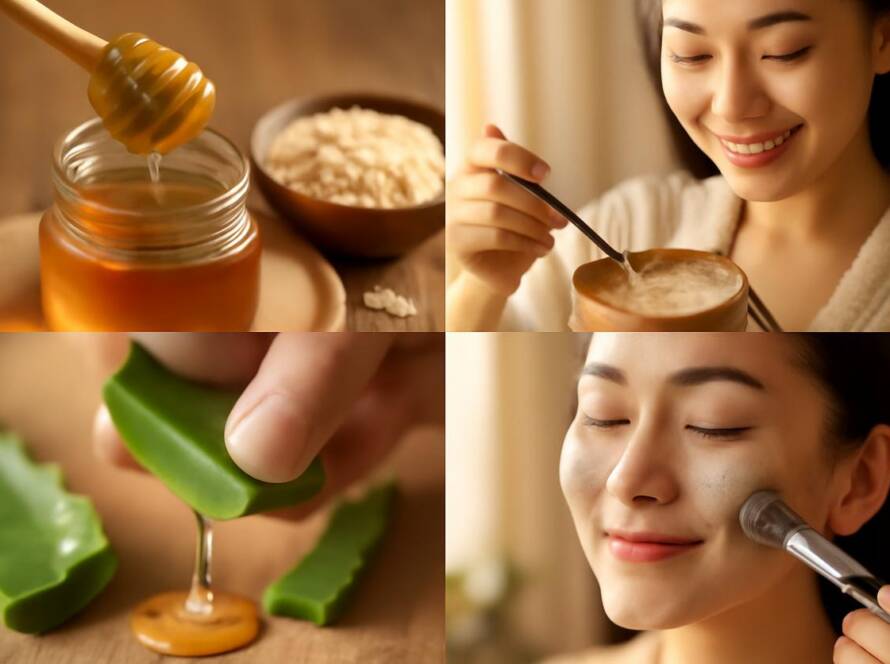
This gentle cleanser uses oats to softly cleanse without stripping the skin and honey for its hydrating and antibacterial benefits. It’s ideal for dry or sensitive skin types.
- Ingredients: 2 tablespoons colloidal oatmeal (or finely ground oats), 1 tablespoon raw honey, 1-2 teaspoons of water or jojoba oil.
- Instructions: Mix the colloidal oatmeal and honey in a small bowl. Slowly add water or oil until you reach a smooth, paste-like consistency. To use, gently massage a small amount onto damp skin in circular motions. Rinse thoroughly with lukewarm water and pat dry. Use immediately; do not store.
Soothing oatmeal mask recipe
When your skin feels irritated, red, or reactive, this calming mask can provide instant relief. The combination of oats and aloe is a classic remedy for inflammation.
- Ingredients: 2 tablespoons colloidal oatmeal, 2 tablespoons pure aloe vera gel, 1 teaspoon honey (optional, for added hydration).
- Instructions: Combine all ingredients in a bowl until you form a thick paste. Apply a thin layer to clean skin, avoiding the eye area. Let it sit for 10-15 minutes. Do not let it dry completely. Rinse off with cool water.
Antioxidant green tea toner recipe
This refreshing toner delivers a dose of antioxidants to protect and calm the skin. It’s suitable for all skin types, especially those concerned with redness or environmental damage.
- Ingredients: 1 organic green tea bag, 1 cup of distilled water, 1 teaspoon aloe vera gel (optional, for hydration).
- Instructions: Boil the distilled water and pour it over the green tea bag. Let it steep for 5-10 minutes, then allow it to cool completely. Once cool, remove the tea bag and stir in the aloe vera gel if using. Pour the mixture into a clean spray bottle or jar. Store it in the refrigerator for up to one week. Apply to clean skin with a cotton pad or by spritzing directly onto the face.
When to avoid DIY and seek professional care
While natural skin care remedies can be wonderful for supporting overall skin health, they are not a substitute for professional medical advice or treatment. It is crucial to know when to step back from DIY and consult a board-certified dermatologist.
You should seek professional care for:
- Severe or Cystic Acne: Deep, painful acne often requires prescription treatments to manage effectively and prevent scarring.
- Persistent Rashes or Hives: If you have a rash that doesn’t resolve, worsens, or is accompanied by other symptoms, it could be a sign of a more serious condition.
- Suspected Skin Infections: Signs of infection include oozing, crusting, significant pain, or warmth to the touch.
- Chronic Skin Conditions: Conditions like eczema, psoriasis, and rosacea require a proper diagnosis and a management plan from a healthcare provider.
- Concerning Moles or Lesions: Any changes in the size, shape, or color of a mole should be evaluated by a dermatologist immediately to rule out skin cancer.
DIY remedies are best for gentle maintenance and soothing minor issues, not for treating serious medical skin conditions.
Integrating natural remedies into a modern routine
You don’t have to choose between an all-natural routine and a conventional one. In fact, one of the best strategies in 2025 is to thoughtfully integrate natural skin care remedies into your existing regimen. This allows you to get the best of both worlds: the targeted efficacy of scientifically formulated products and the gentle, nourishing benefits of nature.
Here are some practical ways to do it:
- Use a DIY Mask Weekly: Continue using your favorite daily cleanser, serum, and moisturizer, but incorporate a soothing oatmeal or hydrating honey mask once or twice a week for an extra boost.
- Alternate Cleansers: Use a gentle DIY oil or oat cleanser in the morning to preserve your skin’s natural oils, and use your targeted conventional cleanser (e.g., one with salicylic acid for acne) at night.
- Natural Spot Treatments: For a minor blemish, a dab of honey can be a gentle alternative to harsh drying lotions, especially if your skin is feeling sensitive.
- Prioritize Sunscreen: No natural ingredient can replace the protective power of a broad-spectrum sunscreen. This should always be the final, non-negotiable step in your morning routine, regardless of what other products you use.
The key to successful integration is listening to your skin. Introduce one new element at a time and observe how your skin responds. The goal is to create a supportive, balanced routine that works for you.
Lifestyle supports for healthy skin (diet, sleep, hydration)
Truly healthy skin is a reflection of overall well-being. The most effective natural skin care remedies are those that combine topical treatments with supportive lifestyle habits. What you do internally is just as important as what you put on your skin.
- Diet: A balanced diet rich in antioxidants, vitamins, and healthy fats provides the building blocks for healthy skin cells. A review of diet and skin health suggests that foods high in vitamin C (citrus fruits, bell peppers), vitamin E (nuts, seeds), and omega-3 fatty acids (fatty fish, flaxseed) can help protect the skin from damage and support its barrier function.
- Hydration: Drinking an adequate amount of water throughout the day is essential for keeping your skin cells hydrated from the inside out. Dehydrated skin can appear dull, and fine lines can become more prominent.
- Sleep: During sleep, your body goes into repair mode. This is when your skin produces new collagen, repairs DNA damage from UV exposure, and reduces inflammation. Aiming for 7-9 hours of quality sleep per night is one of the best things you can do for your complexion.
Troubleshooting common reactions and fixes
Even with careful patch testing, you might occasionally experience a negative reaction to a DIY remedy. Don’t panic. Here’s how to troubleshoot common issues:
- Problem: Sudden Redness or Stinging.
Fix: This is a sign of immediate irritation. Wash the product off immediately with cool water and a very gentle cleanser. Apply a simple, bland moisturizer or a bit of pure aloe vera gel to soothe the skin. Avoid all active ingredients for a few days. - Problem: Breakouts After Using a Plant Oil.
Fix: Not all oils work for all skin types. An oil might be too heavy or comedogenic (pore-clogging) for you. Stop using that specific oil and try a lighter, non-comedogenic option like jojoba or squalane oil next time. - Problem: Dryness or Tightness.
Fix: This can happen if an ingredient is too astringent or if a clay-based mask is left on for too long. Reduce the frequency of use and always follow up with a good moisturizer. Make sure you are not using ingredients that disrupt your skin’s pH, like baking soda.
The most important rule is to listen to your skin. If a natural remedy is causing problems, stop using it. Simplicity is often the best approach to help your skin recover.
Resource list and further reading
Building your knowledge is key to safely and effectively using natural skin care remedies. It’s important to rely on credible, science-backed sources. Here are the resources mentioned in this guide and suggestions for further learning:
- Aloe Vera Research: A review on the properties and uses of Aloe vera.
- Honey for Wound Healing: An overview of the medicinal uses of honey.
- Oatmeal in Dermatology: A look at the benefits of colloidal oatmeal for skin.
- Diet and Skin Health: A scientific review of the link between nutrition and skin aging.
- Patch Testing Guidance: Advice from the American Academy of Dermatology.
For trustworthy information, look to peer-reviewed scientific journals (like those found on PubMed/NCBI), dermatology association websites, and educational resources from cosmetic chemists.
Conclusion — sensible, sustainable skin care habits
Embracing natural skin care remedies is about creating a sensible, sustainable, and enjoyable relationship with your skin. It’s a journey of learning which ingredients nature has to offer and understanding how they interact with your unique biology. By prioritizing safety through patch testing, starting with simple and well-researched ingredients, and knowing when to seek professional advice, you can confidently incorporate these gentle remedies into your life.
The best routine is one that supports your skin’s health from the inside out, combining thoughtful topical care with a healthy lifestyle. Whether you’re mixing up a soothing oatmeal mask or simply brewing a cup of green tea, you are taking a mindful step toward nurturing your skin. These simple acts of self-care are the foundation of a lifelong habit of healthy, glowing skin.