
Table of Contents
- Introduction — Why intentional foot care matters
- Quick safety checklist before you begin
- Foot and nail basics: simple anatomy and common concerns
- Step-by-step home pedicure routine
- Soak and soften: choosing temperatures and solutions
- Exfoliate and address rough patches safely
- Trim and shape nails for comfort
- Gentle cuticle care without damage
- Moisturize and foot massage techniques
- Natural ingredients for foot care and how to use them
- Troubleshooting: calluses, ingrown nails and discoloration
- Tools, storage and sanitizing best practices
- Maintaining results: a two week plan
- When to seek medical advice
- Frequently asked questions
- Closing ritual and quick reference checklist
Introduction — Why intentional foot care matters
Our feet carry us through life, yet they are often the most neglected part of our wellness routine. Intentional foot care, transformed into a mindful pedicure ritual, is more than just a cosmetic treatment; it’s a foundational practice for overall health and well-being. A regular home pedicure can prevent common issues like calluses and fungal infections, improve circulation, and provide a dedicated moment of grounding self-care. It’s about connecting with your body and giving thanks to the parts that work the hardest.
This guide will walk you through creating a restorative and health-focused pedicure experience at home. We’ll move beyond simply painting toenails and focus on the steps that build lasting foot health. By using simple, natural ingredients and establishing a consistent routine, you can turn a basic pedicure into a powerful act of self-love that leaves your feet feeling rejuvenated, healthy, and ready for their next journey.
Quick safety checklist before you begin
Before you dive into your home pedicure, a quick safety check ensures a smooth and beneficial experience. Always prioritize health over aesthetics. Take a moment to review these crucial points:
- Check for open wounds: Do not perform a pedicure if you have cuts, sores, or open blisters on your feet or ankles. Soaking can introduce bacteria and increase the risk of infection. Allow any wounds to heal completely first.
- Sanitize your tools: All metal tools, such as clippers and files, should be washed with soap and water and then wiped down with rubbing alcohol before and after each use.
- Avoid sharing tools: To prevent the spread of fungus and bacteria, your pedicure tools should be for your personal use only.
- Work in a clean space: Make sure the area where you will perform your pedicure is clean and well-lit. Lay down a clean towel to protect surfaces and provide a comfortable spot for your feet.
- If you have diabetes or poor circulation: Consult your doctor before performing a home pedicure. These conditions can increase the risk of infection and complications from minor cuts, so professional foot care guidance is often recommended.
Foot and nail basics: simple anatomy and common concerns
Understanding the basics of your feet and nails can empower you to provide better care. Your feet are complex structures, and your toenails serve a protective purpose. Here’s a simple breakdown:
- The Nail Plate: This is the hard, visible part of the nail that you trim and polish. It is made of a protein called keratin.
- The Cuticle: This is the thin layer of tissue at the base of the nail plate. Its job is to create a seal that protects the new nail from bacteria as it grows. This is why aggressive cutting or pushing is discouraged.
- The Nail Bed: The soft skin underneath the nail plate. It provides nourishment and support for the nail.
- The Sole: The bottom of your foot. Areas that bear the most pressure, like the heel and the ball of the foot, are prone to developing thick, protective layers of skin called calluses.
Common concerns like brittle nails can sometimes be linked to aging, frequent exposure to water, or nutritional factors. You can learn more from this helpful nail anatomy overview. A proper pedicure addresses these areas with care, focusing on promoting health rather than causing harm.
Step-by-step home pedicure routine
Transform your space into a sanctuary and follow this ritual for the perfect health-focused home pedicure. Put on some calming music, dim the lights, and give yourself this time to unwind.
Soak and soften: choosing temperatures and solutions
The first step in any great pedicure is a warm, relaxing soak. This not only cleanses your feet but also softens the skin and nails, making them easier to care for. Fill a basin or your bathtub with warm—not hot—water. Hot water can strip your skin of its natural oils, leading to dryness.
Enhance your soak with natural additions:
- Epsom salts: A handful can help soothe sore muscles and reduce inflammation.
- Essential oils: A few drops of tea tree oil offer antifungal properties, while lavender or peppermint can be calming or invigorating.
- Milk and honey: The lactic acid in milk gently exfoliates, while honey is a natural humectant that draws moisture into the skin.
Soak your feet for 10-15 minutes. Any longer can lead to overly softened nails, which are more prone to tearing. After soaking, pat your feet dry with a clean towel, making sure to dry thoroughly between the toes.
Exfoliate and address rough patches safely
Exfoliation removes dead skin cells, revealing softer skin underneath and improving circulation. Avoid harsh, sharp tools, which can cause injury and infection. Instead, opt for gentle, effective methods.
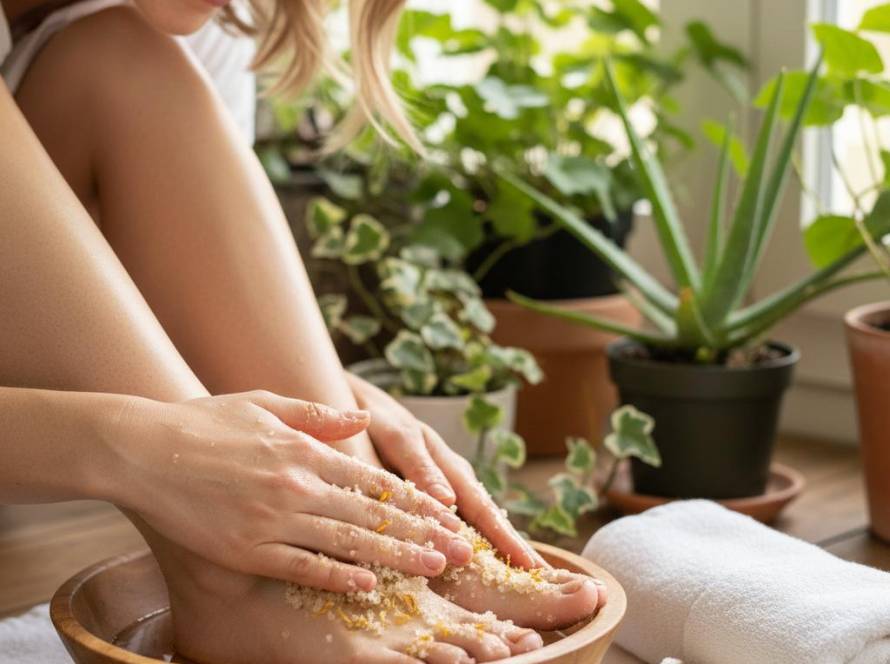
While your feet are still slightly damp, use a pumice stone or a foot file on areas with thicker skin, like your heels and the balls of your feet. Use gentle, circular or back-and-forth motions. The goal is to smooth, not to remove all the thickened skin at once, as some of it is protective. For an all-over exfoliation, you can use a simple sugar or salt scrub mixed with a carrier oil like coconut or olive oil. Massage this into your feet and ankles, then rinse and pat dry.
Trim and shape nails for comfort
Proper nail trimming is crucial for preventing discomfort and issues like ingrown toenails. Always use a clean, sharp toenail clipper designed for the job.
- Trim straight across: Do not curve the edges of your toenails. Trimming them straight across helps prevent the nail from growing into the surrounding skin.
- Keep them a comfortable length: Don’t trim them too short. The ideal length is to have the nail even with the tip of your toe.
- Smooth the edges: Use a nail file to gently smooth any sharp corners or rough edges. File in one direction to prevent splitting.
Gentle cuticle care without damage
The cuticle is a natural barrier against bacteria. Aggressive cutting or trimming of the cuticle is not recommended as it can lead to infection and damage. Instead, practice gentle care. After your soak, your cuticles will be soft. Apply a drop of cuticle oil or any natural oil (like olive or jojoba oil) to the base of each toenail. Use a soft cloth or an orange stick wrapped in cotton to very gently push the cuticle back. The key is to be extremely gentle; if it hurts, you are pushing too hard.
Moisturize and foot massage techniques
The final step of your pedicure ritual is to deeply moisturize and massage. This rehydrates the skin, improves circulation, and feels incredibly relaxing. Choose a thick, rich cream or a natural butter like shea or cocoa butter.
Apply a generous amount to your feet and ankles. Use your thumbs to apply firm, circular pressure to the arches and balls of your feet. Gently pull each toe to release tension. Massage your ankles in a circular motion. This simple massage not only feels good but also helps the moisturizer penetrate deeply. For an intensive overnight treatment, apply the moisturizer, then put on a pair of clean cotton socks before bed.
Natural ingredients for foot care and how to use them
You don’t need expensive products for an effective pedicure. Many of the best ingredients can be found right in your kitchen pantry. Here’s how to use them:
- Epsom Salt (Magnesium Sulfate): Perfect for your foot soak. It helps reduce swelling, soothe aches, and soften skin. Use about a half cup in a warm foot basin.
- Oatmeal: A fantastic gentle exfoliant and skin soother. Grind plain oatmeal into a fine powder, mix with a little water to form a paste, and use it as a mild scrub.
- Sugar or Coarse Salt: Excellent physical exfoliants. Mix with a carrier oil like olive or coconut oil to create a simple, effective scrub for rough patches.
- Olive Oil: A wonderful natural moisturizer. Use it as a cuticle oil or as a deeply hydrating massage oil at the end of your pedicure.
- Apple Cider Vinegar: Known for its antimicrobial properties. Adding a splash to your foot soak can help neutralize foot odor and tackle athlete’s foot.
- Lemon: The citric acid in lemon can help brighten discolored nails. Rub a slice of lemon on your toenails for a few minutes before rinsing. Be sure not to do this if you have any cuts.
Troubleshooting: calluses, ingrown nails and discoloration
Even with regular care, you might encounter some common foot issues. Here’s how to handle them safely.
- Calluses: These are thick, hard layers of skin that form in response to friction and pressure. The key is gradual removal. Use a pumice stone or foot file a few times a week after a bath or shower. Never try to cut or shave calluses at home, as this can lead to serious injury and infection.
- Ingrown Nails: This occurs when the corner of a toenail grows into the surrounding skin. The best prevention is trimming your nails straight across. If you have a minor, slightly red ingrown nail, a warm salt soak may help. However, if it is very painful, swollen, or shows signs of infection (like pus), you must see a doctor or podiatrist.
- Discoloration: Yellowish nails can be caused by nail polish stains or a fungal infection. Try taking a break from polish and buffing the nail surface gently. If the discoloration persists, worsens, or is accompanied by thickening or crumbling, it’s likely a fungus and requires medical attention.
Tools, storage and sanitizing best practices
Having the right tools—and keeping them clean—is essential for a safe and effective home pedicure.
Your Basic Pedicure Toolkit:
- A basin or tub for soaking
- Toenail clippers
- Nail file (an emery board or glass file works well)
- Pumice stone or foot file
- Orange stick or cuticle pusher
- Clean towels
Sanitizing Routine:
Cleanliness is non-negotiable. After every pedicure:
- Wash: Wash all metal tools with soap and hot water to remove any debris.
- Disinfect: Wipe them down thoroughly with a cotton pad soaked in isopropyl (rubbing) alcohol.
- Dry and Store: Allow the tools to air dry completely before storing them in a clean, dry pouch or container. This prevents rust and bacterial growth.
Disposable items like emery boards should be replaced regularly.
Maintaining results: a two week plan
A single pedicure feels great, but consistent care is what truly transforms your foot health. Here is a simple plan to maintain your results between full pedicure sessions. This maintenance schedule is designed for your 2026 wellness goals and beyond.
| Frequency | Task | Purpose |
|---|---|---|
| Daily | Wash, dry thoroughly (especially between toes), and moisturize. | Prevents fungal growth and keeps skin soft. |
| A few times a week | Use a pumice stone on rough spots after your shower. | Keeps calluses from building up. |
| Once a week | Perform a quick file and cuticle oil application. | Maintains nail shape and cuticle health. |
| Every two weeks | Perform your full pedicure ritual. | A complete reset for healthy, happy feet. |
When to seek medical advice
A home pedicure is for maintenance and wellness, not for treating medical conditions. It’s important to know when to put down the pumice stone and pick up the phone to call a healthcare professional. You should seek advice from a doctor or a podiatrist (a foot specialist) if you experience any of the following:
- Signs of infection: This includes redness, swelling, pus, or increased pain around a nail or on your foot.
- Persistent pain: Any foot pain that doesn’t go away or gets worse should be evaluated.
- Nails that are very thick, crumbly, or discolored: This can be a sign of a fungal infection that requires prescription treatment.
- A suspected ingrown nail that is very painful or appears infected.
- Wounds that are not healing.
Remember, if you have underlying health conditions like diabetes, neuropathy, or poor circulation, it is always best to have your feet cared for by a professional.
Frequently asked questions
How often should I do a full home pedicure?
A full pedicure is recommended every two to four weeks. In between, you can perform smaller maintenance tasks like moisturizing daily and filing nails as needed.
Is it bad to cut my cuticles?
Yes, it’s generally advised to avoid cutting your cuticles. They act as a protective barrier. Cutting them can open the door to infection and may cause them to grow back thicker and more ragged. Gently pushing them back after softening is a much safer alternative.
What is the best way to deal with very thick calluses?
The safest approach is gentle and consistent removal. Soak your feet, then use a pumice stone or foot file. Never use sharp, blade-like tools. For severe calluses, a podiatrist can remove them safely.
Can I still give myself a pedicure if I have a fungal infection?
It’s best to see a doctor for treatment first. While performing a pedicure, be extra careful not to spread the fungus. Use separate tools for the infected nail, and sanitize everything thoroughly afterward. Avoid using nail polish, as it can trap moisture and worsen the infection.
Closing ritual and quick reference checklist
Conclude your pedicure ritual with a moment of gratitude. Take a few deep breaths and appreciate the feeling of your newly cared-for feet. This simple act reinforces the connection between self-care and overall well-being. Keep this checklist handy for your next session to ensure you cover all the essential steps for a healthy and restorative pedicure.
- [ ] Safety Check: No open wounds, tools are sanitized.
- [ ] Soak: 10-15 minutes in warm water with Epsom salts or oils.
- [ ] Exfoliate: Use a pumice stone on rough spots and a gentle scrub all over.
- [ ] Trim and File: Clip nails straight across and smooth the edges.
- [ ] Cuticle Care: Apply oil and gently push back, do not cut.
- [ ] Moisturize and Massage: Use a rich cream and take time to massage your feet.
- [ ] Sanitize Tools: Wash, disinfect, and store your tools properly for next time.