
Table of Contents
- Why a Wellness Pedicure Matters
- Foot Anatomy and Common Problems to Watch For
- Essential Tools and Gentle Ingredients to Prepare
- Step-by-Step At-Home Pedicure Routine
- Nail Shaping and Polish Techniques for Healthier Results
- Targeted Tips for Calluses, Dry Skin, and Ingrown Nails
- Seasonal Pedicure Adjustments and Protective Habits
- Simple Between-Session Maintenance to Prolong Results
- When to Seek Medical Advice or Professional Assessment
- Common Questions and Quick Troubleshooting
A pedicure is often seen as a cosmetic luxury—a way to get colorful, sandal-ready toes. But what if we shifted our perspective? A true pedicure is a wellness ritual, a vital practice for maintaining the health, comfort, and foundation of your entire body: your feet. This guide will walk you through creating a safe, effective, and deeply relaxing at-home pedicure experience that prioritizes health over aesthetics. Forget aggressive tools and harsh chemicals; we are embracing a gentle, science-backed approach to foot care that you can perform with confidence.
Why a Wellness Pedicure Matters
Your feet carry you through life, absorbing thousands of pounds of pressure every single day. Neglecting them can lead to discomfort, pain, and even larger health issues. A regular, wellness-focused pedicure is more than just a treat; it is preventative maintenance.
The benefits of a consistent foot care routine include:
- Early Detection of Issues: Regularly examining your feet during a pedicure allows you to spot potential problems like fungal infections, corns, or blisters before they become serious. You become the first line of defense for your own foot health.
- Improved Circulation: The simple act of soaking your feet in warm water and massaging them with lotion stimulates blood flow, which can help reduce pain and distribute heat throughout your body.
- Stress Reduction: The ritual of a pedicure is inherently calming. Focusing on this act of self-care can lower stress levels, ease tension, and promote a sense of well-being.
- Enhanced Comfort: By managing calluses, moisturizing dry skin, and caring for your nails properly, you prevent the cracks, roughness, and pressure points that cause daily discomfort. A good pedicure makes walking and standing more comfortable.
Foot Anatomy and Common Problems to Watch For
Understanding the basics of your feet helps you care for them more effectively. Each foot is a complex structure of 26 bones, 33 joints, and a network of muscles, ligaments, and nerves. The skin on the soles of your feet is naturally thicker to withstand pressure, but it also lacks oil glands, making it prone to dryness.
A Quick Look at Your Feet
When performing your pedicure, take a moment to observe your feet. Notice the shape of your arches, the condition of your skin, and the health of your nails. This mindful check-in is a crucial part of a wellness-focused pedicure. Are there areas of redness, persistent dryness, or discoloration? Keeping a mental note of these things helps you track your foot health over time.
Common Foot Concerns
While a pedicure can help manage many minor issues, it is important to know what to look for. Some common problems include:
- Dry, Cracked Heels: Caused by a lack of moisture, this can worsen with pressure and open-heeled shoes.
- Calluses: These are areas of thickened skin that build up in response to repeated friction or pressure. They are the body’s way of protecting the underlying skin.
- Corns: Similar to calluses, corns are smaller, more concentrated areas of hard skin, often on or between the toes.
- Fungal Nail Infections: These can cause nails to become discolored (yellow or brown), brittle, and thick.
This awareness is for educational purposes. If you notice persistent pain, signs of infection, or anything unusual, it is always best to consult a healthcare professional. For more information on common foot problems, official health resources provide reliable guidance.
Essential Tools and Gentle Ingredients to Prepare
Creating a spa-like experience at home starts with having the right tools and ingredients. The focus here is on safety, hygiene, and gentle effectiveness.
Your At-Home Pedicure Toolkit
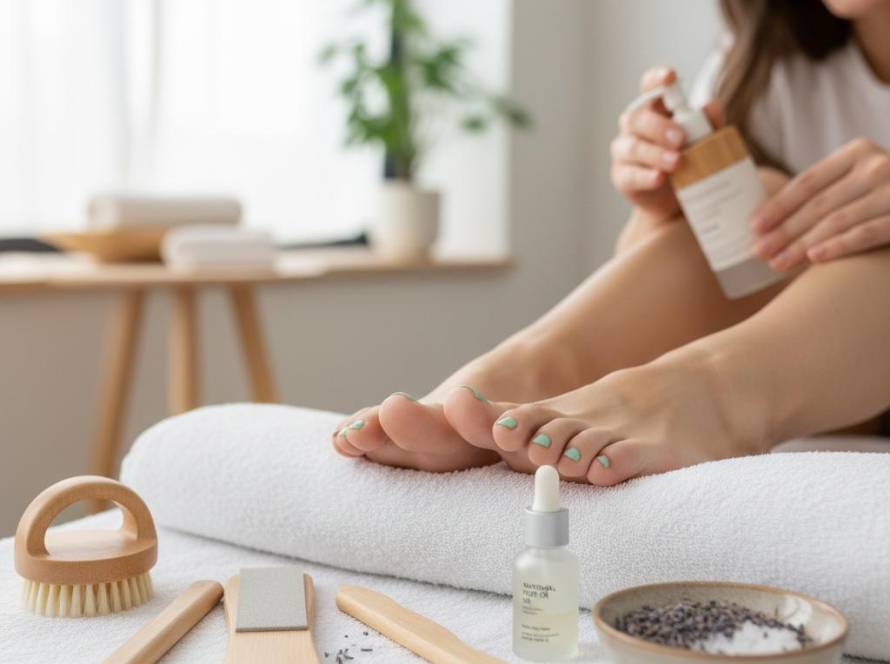
Invest in a quality set of tools and, most importantly, keep them clean. Disinfect your tools with rubbing alcohol before and after each use to prevent the spread of bacteria.
- Foot Basin: A simple tub large enough for both feet to soak comfortably.
- Nail Clippers: Choose a straight-edged clipper designed for toenails.
- Nail File or Emery Board: For smoothing and shaping nail edges.
- Nail Buffer: A multi-sided tool to smooth ridges and add a natural shine.
- Pumice Stone or Foot File: For gently sloughing away dead skin and calluses. Avoid aggressive metal files or graters, which can cause injury.
- Cuticle Pusher or Orangewood Stick: To gently push back cuticles. Never cut your cuticles, as they serve as a protective barrier against infection.
- Soft Towel: For drying your feet thoroughly.
- Moisturizer or Foot Cream: A thick, rich cream to hydrate the skin.
Gentle, Nourishing Ingredients
You do not need expensive products to have an effective pedicure. Many of the best ingredients can be found in your kitchen or garden.
- For the Soak: Add Epsom salts to soothe tired muscles, a few drops of lavender essential oil for relaxation, or tea tree oil for its antifungal properties.
- For Exfoliation: Create a simple scrub by mixing sugar or coarse sea salt with a carrier oil like coconut or olive oil.
- For Moisturizing: Coconut oil, shea butter, or even olive oil work wonderfully as natural, intensive moisturizers.
Step-by-Step At-Home Pedicure Routine
Set aside 30-45 minutes where you will not be disturbed. Put on some calming music, light a candle, and enjoy this restorative process.
Step 1: Preparation is Key
Start by removing any old nail polish with a non-acetone remover, which is less drying on your nails and skin. Gather all your clean, disinfected tools and ingredients so everything is within reach.
Step 2: The Soothing Soak
Fill your foot basin with warm—not hot—water. Hot water can strip your skin of its natural oils. Add your chosen enhancements, like Epsom salts or essential oils. Soak your feet for 10-15 minutes. This softens the skin, making exfoliation easier, and helps relax tired foot muscles.
Step 3: Gentle Exfoliation
After soaking, pat your feet dry. While your skin is still slightly damp and soft, use a pumice stone or gentle foot file on areas with calluses, such as your heels and the balls of your feet. Use light, gentle motions. The goal is to remove the top layer of dead skin, not to scrub aggressively. If you made a DIY scrub, this is the time to use it, massaging it over your entire foot before rinsing.
Step 4: Nail Trimming and Care
Using a clean, straight-edged toenail clipper, trim your nails straight across. Avoid cutting them too short or rounding the corners, as this is a primary cause of painful ingrown toenails. Use a nail file to gently smooth any sharp edges, always filing in one direction to prevent splitting. Next, take your cuticle pusher or orangewood stick and gently push your cuticles back. Again, do not cut them.
Step 5: Moisturize and Massage
This is the most luxurious step of your home pedicure. Apply a generous amount of a thick moisturizer to your feet. Take the time to massage it in, paying special attention to your heels, arches, and each toe. This not only hydrates your skin but also relieves tension and boosts circulation. For an intensive treatment, apply the cream, put on a pair of cotton socks, and let it absorb overnight.
Nail Shaping and Polish Techniques for Healthier Results
If you choose to apply polish, a few extra steps can protect your nails and make your pedicure last longer.
Shaping for Strength
When filing your nails after trimming, move the file from the outer edge toward the center. Sawing back and forth can weaken the nail and cause it to peel or break. A gentle, one-direction motion creates a smoother, stronger edge.
The Health-Conscious Polish Approach
For a lasting and healthier manicure, follow these guidelines:
- Always use a base coat: This protects your nails from staining and helps the polish adhere better.
- Apply thin coats: Two thin coats of color are better than one thick, goopy one. Allow each coat to dry for a few minutes before applying the next.
- Finish with a top coat: A top coat seals the color, adds shine, and prevents chipping.
- Give your nails a break: In 2025 and beyond, the trend is toward nail health. Consider going polish-free for a week or two between pedicures to allow your nails to breathe and recover.
Targeted Tips for Calluses, Dry Skin, and Ingrown Nails
A consistent pedicure routine is the best way to manage common foot problems at home.
Managing Calluses and Dry Skin
The key to soft, smooth feet is consistency. Do not try to remove a thick callus all at once. Instead, gently file it down a little with each pedicure. Daily moisturizing is non-negotiable for preventing dry, cracked skin. Make applying foot cream part of your nightly routine.
Preventing Ingrown Toenails
Prevention is the best strategy. The single most important habit is proper nail care. Always cut toenails straight across and ensure your shoes are not too tight, as pressure on the toes can contribute to the nail growing into the skin.
Seasonal Pedicure Adjustments and Protective Habits
Your foot care needs change with the seasons. Adapting your pedicure routine ensures your feet stay comfortable and healthy all year long.
Summer Foot Care
In summer, your feet are more exposed. Use a scrub more regularly to deal with sand and dirt. Do not forget to apply sunscreen to the tops of your feet to prevent sunburn. A cooling pedicure soak with peppermint oil can be especially refreshing on hot days.
Winter Foot Care
Cold weather and indoor heating can lead to extreme dryness. Switch to a richer, thicker moisturizer. Indulge in warmer, longer soaks to boost circulation. A weekly intensive moisturizing treatment with cotton socks overnight can work wonders during the winter months.
Simple Between-Session Maintenance to Prolong Results
Keep your feet feeling great long after your pedicure is over with these simple habits:
- Moisturize daily: Apply lotion or cream to your feet every night before bed.
- Dry feet thoroughly: After showering, make sure to dry completely between your toes to prevent fungal growth.
- Wear comfortable shoes: Choose shoes that fit well and provide adequate support to prevent calluses and other pressure-related issues.
- Alternate your shoes: Give your shoes a day to air out between wears to reduce moisture and bacteria buildup.
When to Seek Medical Advice or Professional Assessment
An at-home pedicure is wonderful for maintenance, but it is not a substitute for medical care. Consult a doctor or a podiatrist if you experience any of the following:
- Signs of infection, such as redness, swelling, pus, or warmth.
- Pain that does not go away.
- An ingrown toenail that is deeply embedded or looks infected.
- Wounds or sores that are not healing.
- Significant changes in the color or texture of your nails or skin.
Individuals with diabetes or poor circulation should be especially cautious and consult a healthcare professional before beginning an at-home pedicure routine.
Common Questions and Quick Troubleshooting
Why are my heels always so dry?
The skin on your heels is thick and has fewer oil glands than the rest of your body. This, combined with the constant pressure of walking, makes them highly susceptible to dryness. Consistent daily moisturizing and gentle, regular exfoliation during your pedicure are the best solutions.
How often should I do a home pedicure?
A full pedicure routine is beneficial every 2 to 4 weeks. However, daily moisturizing and regular checks of your feet are great habits to maintain. Listen to your feet—if they feel rough or tired, it might be time for some care.
Is it safe to cut my own cuticles?
It is strongly advised not to cut your cuticles. The cuticle is a natural barrier that protects your nail matrix from bacteria and infection. Cutting it can create tiny wounds and increase your risk of infection. Instead, gently push them back with an orangewood stick after soaking.
Embracing the at-home pedicure as a wellness ritual transforms it from a chore into a powerful act of self-care. By focusing on gentle techniques, clean tools, and consistent attention, you are not just creating beautiful feet—you are building a foundation of health and comfort that will support you with every step you take.